 Skin & Laser
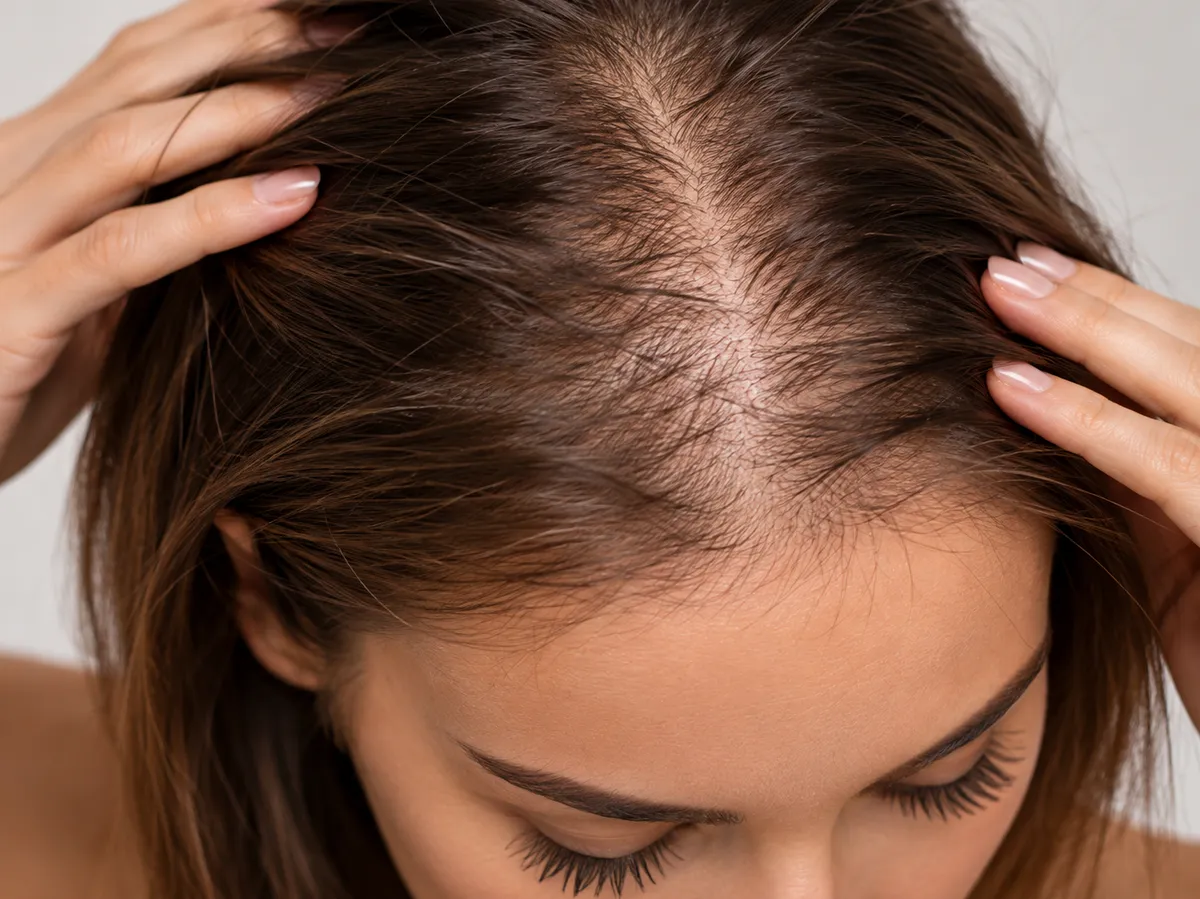
Hair loss in women is common, yet it is often missed or dismissed. The good news is that many causes are treatable, and finding the cause is the most important step.
How female hair loss looks
Women rarely develop a receding hairline or bald crown like men. More often you notice:
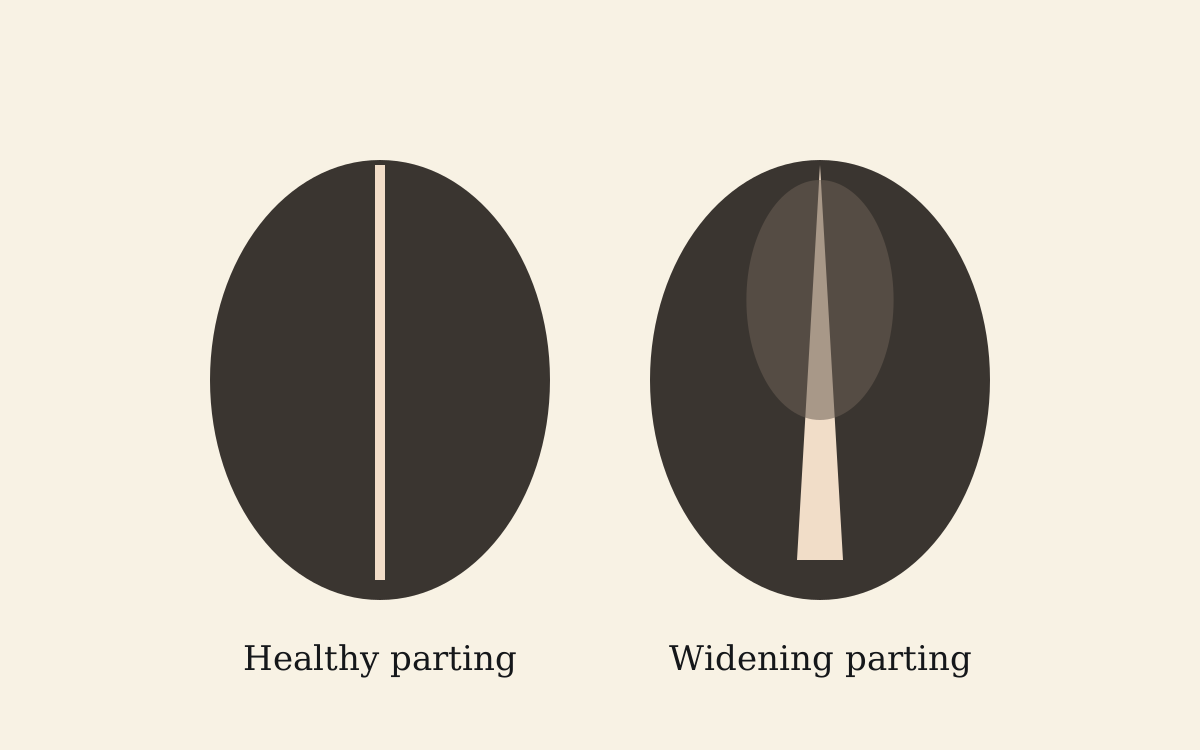
- A widening parting or more scalp showing on top
- A thinner ponytail
- More hair in the shower or on the pillow
- Thinning at the temples from tight styles or extensions
Common causes
- Female pattern hair loss: an inherited sensitivity of the follicles that causes gradual thinning on top.
- Telogen effluvium: sudden shedding two to three months after illness, surgery, stress, crash dieting or a medication change.
- Postpartum shedding: heavy shedding a few months after giving birth, which usually recovers.
- Low iron or vitamin D: both are common and both can affect hair.
- Thyroid changes: an under- or over-active thyroid can cause diffuse thinning.
- Hormonal conditions: such as polycystic ovary syndrome.
- Traction alopecia: from tight ponytails, braids or extensions.
Tests we usually check
A scalp examination and a few blood tests often explain what is happening. Common tests include ferritin (iron stores), full blood count, vitamin D, thyroid function and, where relevant, hormone markers. DrypSkin Clinic offers these on site.
Treating the cause comes first. A treatment chosen without a diagnosis is a guess.
Treatments that help
- Correcting deficiencies such as low iron or vitamin D
- Prescription treatment chosen by your doctor, which may include minoxidil and, in some cases, medicines that reduce the effect of hormones on the follicle
- PRP to strengthen thinning hair, often combined with mesotherapy and LED therapy
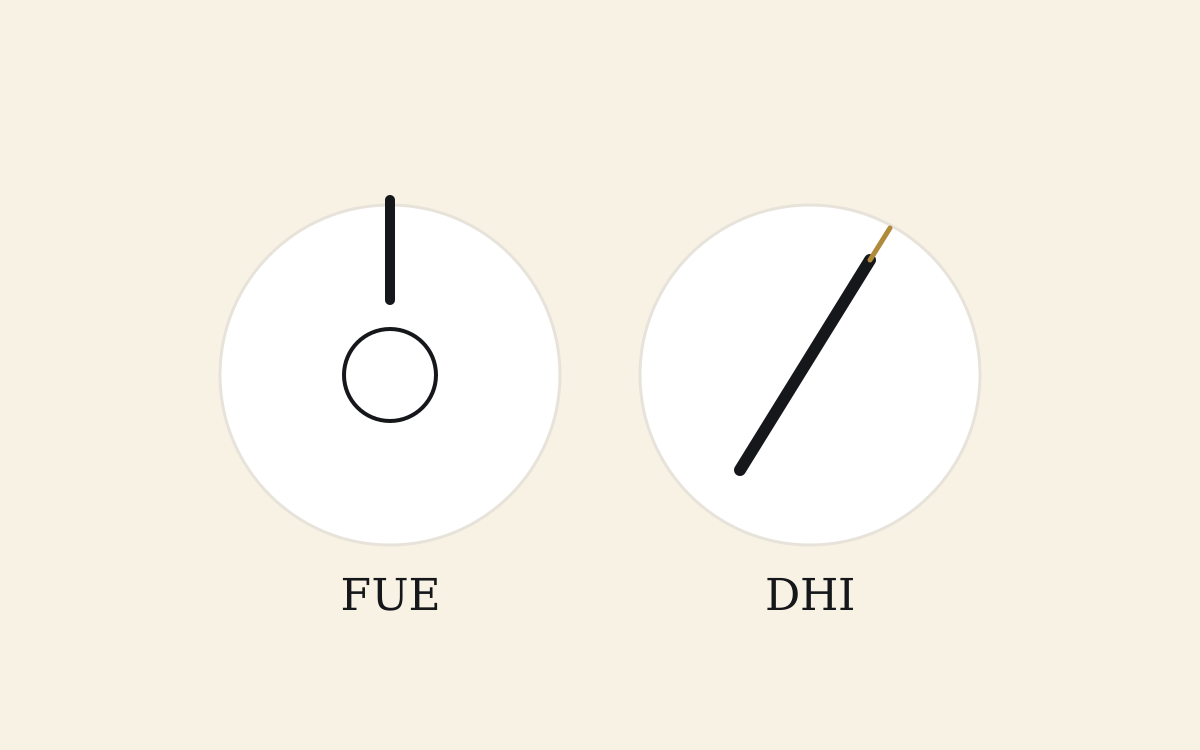
- Unshaven DHI transplant for stable, localised thinning at the hairline or parting
You can see what is included in our hair loss packages, and read more about our approach on the women's hair restoration page.
When to see a doctor
Book an assessment if your shedding lasts longer than three months, your parting is widening, you notice patches of hair loss, or your scalp is itchy, scaly or sore. Early treatment protects more of the hair you have.
Questions people ask
What is the most common cause of hair loss in women?
Female pattern hair loss, an inherited sensitivity of the follicles, is the most common. Low iron, thyroid problems, hormonal changes and stress-related shedding are also frequent.
Which blood tests should women have for hair loss?
Common tests include ferritin (iron stores), full blood count, vitamin D, thyroid function and, where relevant, hormone markers. Your doctor chooses the panel based on your history.
Can women get a hair transplant?
Yes, when thinning is stable and localised, such as at the hairline or parting, and the donor area is strong. Many women are treated with unshaven DHI.
Will my hair grow back after postpartum shedding?
Postpartum shedding usually recovers within six to twelve months. If it does not, an assessment can check for low iron or an underlying pattern.
This page is for general information and does not replace a medical consultation. Suitability, results and the number of sessions vary from person to person and are confirmed by our physician before treatment.